






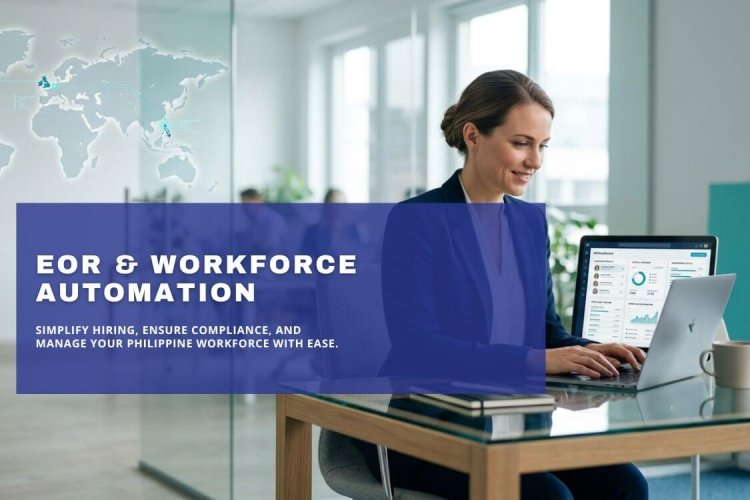
Hiring across borders has never been simple, but for UK businesses it has become noticeably more complicated in recent years. Between shifting employment regulations, IR35 considerations for how workers are classified, and the practical challenge of managing a team eight hours ahead, expanding overseas can feel like more trouble than it’s worth.
The Philippines is still one of the most attractive destinations for UK companies building remote teams. It offers a large, English-speaking, well-educated workforce and decades of experience supporting Western businesses, particularly in finance, IT, and customer service roles. The catch is that hiring there properly means navigating local labour law, payroll, and statutory benefits, none of which most UK HR teams have direct experience with.
This is where an employer of record in the Philippines earns its keep. Combined with modern workforce automation, it removes both the legal risk and the administrative drag that typically slow down international hiring. Below, we’ll unpack how the two work together, and what UK employers should look for when choosing a partner.
Understanding the Employer of Record Model in the Philippines
What’s the best way to manage a remote workforce in the Philippines without setting up a legal entity? In short: use an employer of record. An EOR becomes the legal employer of your Philippine-based staff on paper, while you retain full control over their day-to-day work, targets, and reporting lines.
In practical terms, an EOR arrangement in the Philippines typically handles:
- Drafting locally compliant employment contracts
- Running payroll, including mandatory contributions to SSS, PhilHealth, and Pag-IBIG
- Withholding and remitting income tax in line with Bureau of Internal Revenue rules
- Managing statutory leave, 13th-month pay, and termination processes in accordance with Department of Labor and Employment (DOLE) requirements
Setting up a local entity, by contrast, can take months and requires ongoing corporate compliance, local directors, and tax filings, even if you only intend to hire a handful of people. For most UK businesses testing the market or scaling a small offshore team, that overhead simply isn’t justified. This is one reason the Philippines has become such a strategic market for EOR arrangements, backed by an outsourcing ecosystem tracked closely by bodies such as the IT and Business Process Association of the Philippines (IBPAP).
The Role of Automation in Modern Workforce Management
Workforce automation refers to the software and systems that handle repetitive HR and payroll tasks without manual intervention, forming the backbone of remote workforce management for distributed teams. This typically covers:
- Onboarding — digital contract signing, document collection, and ID verification before day one
- Payroll processing — automated calculations, statutory deductions, and payslip generation
- Leave tracking — real-time balances, approvals, and calendar syncing across time zones
- Reporting — dashboards showing attendance, productivity, and cost data in one place
The value here isn’t just convenience. Manual payroll and HR processes are prone to human error, and errors in statutory deductions or leave calculations can create compliance headaches down the line. Automation shifts workforce management in the Philippines from something reactive, where problems are noticed after they happen, to something proactive, where data and alerts flag issues before they become costly.
Why EOR and Automation Work Better Together

How does combining an employer of record with automation tools make workforce management easier? An EOR manages legal and regulatory compliance, while automation manages day-to-day operational efficiency. Used separately, each solves half the problem.
A UK business that relies purely on an EOR without automation may still be chasing paper timesheets or manually reconciling leave requests across time zones. One that uses automation tools without a proper EOR risks misclassifying workers or falling foul of Philippine labour law entirely, regardless of how slick the software looks.
Consider a UK-based professional services firm that wants to hire three finance associates in Manila. Using an EOR ensures their contracts, tax withholdings, and statutory benefits are handled correctly from day one. Layering automation on top means the London-based finance director can see payroll costs, leave balances, and onboarding status in a single dashboard, without emailing anyone in a different time zone at 11pm to ask where a document is. Together, the two create a genuinely seamless experience for both the employer and the employee, closing the operational gap that neither solution fully addresses on its own.
Key Benefits for UK Employers Hiring in the Philippines
| Benefit | What it means in practice |
| Faster onboarding | Contracts and documents collected digitally from day one |
| Full legal compliance | Alignment with Philippine employment law, no local legal counsel required |
| Payroll accuracy | Automated statutory deductions reduce costly errors |
| Cost efficiency | Avoids the overhead of setting up and maintaining a local entity |
| Scalability | The same process works whether you hire one person or a hundred |
| Real-time visibility | Centralised dashboards replace scattered spreadsheets and emails |
It’s worth being candid here: this model isn’t automatically cheaper than every alternative in every scenario. For large, long-term operations, some businesses eventually find that establishing their own entity makes financial sense. For most UK companies hiring a handful of roles, though, an EOR paired with automation is generally the more practical and lower-risk route, particularly in the first one to three years of building an offshore presence.
What to Look for in an EOR + Automation Partner
Not every provider offers the same depth of service when it comes to global workforce management. UK employers evaluating options should look for:
- Genuine in-country legal expertise in the Philippines, not just a reseller arrangement
- A platform that connects HR, payroll, and compliance rather than three disconnected tools
- Transparent, predictable pricing with no hidden entity setup costs
- Dedicated support that understands the practicalities of managing a team across the UK-Philippines time gap
- A track record of working with international clients, ideally in your sector
How CreaThink Solutions Supports UK Employers
This is exactly the gap CreaThink Solutions was built to close. Through our EOR solution, UK businesses can hire staff in the Philippines without the delay or cost of setting up a local entity, while staying fully compliant with DOLE requirements and local statutory obligations.
Where automation is concerned, CreaThink Solutions pairs its EOR service with streamlined onboarding and reporting processes as part of our BPO and EOR solutions, so clients get visibility into their team without having to manage every administrative detail themselves. For UK firms in sectors like finance and accounting outsourcing, IT and technology outsourcing, or professional and business services outsourcing, this combination tends to solve the two biggest hesitations UK decision-makers raise: compliance risk and the fear of losing oversight once a team is offshore. You can read more about, CreaThink Solutions and the specific industries supported on the industries we support page.
For UK businesses expanding into the Philippines, pairing a reliable employer of record with the right automation tools is, for most, the smartest and lowest-risk way to build an offshore team. The EOR handles the legal and compliance side properly, while automation keeps the day-to-day running smoothly, without the delays and manual admin that typically slow international hiring down.
CreaThink Solutions handles the compliance and employment side seamlessly, so your team can focus on the work rather than the paperwork. Looking to hire in the Philippines without the compliance headache? Visit CreaThink Solutions’ website to learn more, browse our blog for further insights on outsourcing, or get in touch with the team today.
Stay updated with the latest insights by following us on Facebook, LinkedIn, and YouTube.