






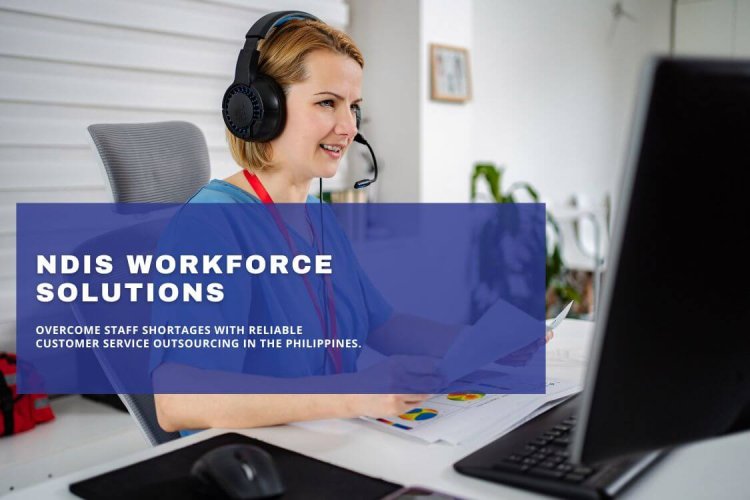
Australian disability service providers are being asked to do more with less. Participant numbers keep climbing, compliance obligations keep growing, and the workers needed to keep it all running are getting harder to find and even harder to keep. For many organisations, the National Disability Insurance Scheme (NDIS) has become as much a workforce puzzle as a care mission.
Why are NDIS providers struggling to find and keep staff? In short, it comes down to a mismatch between demand and capacity. Participant growth has outpaced the supply of qualified support workers, while pricing constraints under the NDIS make it difficult for providers to compete on wages with aged care, health, and community services. The NDS State of the Disability Sector Report points to the same pattern nationally: financial pressure, policy uncertainty, and workforce shortages are compounding each other across the sector. The result is chronic understaffing, rising turnover, and burnt-out teams trying to hold services together.
This isn’t a niche problem. National Disability Services (NDS) reported that disability sector turnover reached 24 percent overall in its most recent Workforce Census, with permanent staff turnover climbing to 16 percent, the highest level recorded since the census began. Onboarding a single new hire now costs providers between roughly $2,130 and $3,320, and NDS estimates the sector-wide cost of turnover runs into the tens of millions of dollars each year. For an industry already navigating thin margins, that’s a serious drain on resources that could otherwise go toward participant care.
The Key Workforce Challenges NDIS Providers Face
Most providers are contending with several overlapping pressures at once.
- High staff turnover. Heavy workloads, casualised employment, and comparatively low pay are pushing support workers out of the sector faster than they can be replaced. Program leaders often absorb the gap themselves, which only accelerates burnout further up the chain.
- Rising operational costs. Wage growth and compliance costs continue to rise, but pricing flexibility under the NDIS price guide hasn’t kept pace, leaving little room to offer more competitive salaries or invest in retention.
- Administrative burden. Scheduling, billing, participant enquiries, and reporting consume hours that support coordinators and care staff would rather spend on direct participant support.
- Compliance pressures. Meeting NDIS Practice Standards, worker screening requirements, and reporting obligations takes dedicated administrative capacity that many smaller providers simply don’t have.
- Talent shortage. Even where budgets allow for new hires, local NDIS recruitment often can’t meet demand. The Joint Standing Committee on the NDIS Workforce has flagged recruitment difficulty as one of the biggest operational barriers providers currently face, and government workforce planning has long projected a shortfall of tens of thousands of workers against the sector’s growth.
None of these challenges exist in isolation. Turnover drives up admin load, admin load pulls staff away from care, and understaffing pushes remaining workers toward burnout, which feeds turnover again. Breaking that cycle usually means looking at which tasks genuinely require an on-the-ground, qualified disability support worker, and which don’t.
Why Outsourcing Customer Service to the Philippines Is a Viable Solution
Not every role in a NDIS organisation needs to sit onshore. Participant scheduling, general enquiries, intake support, billing and invoicing, and routine participant communications are all administrative in nature. This is where customer service outsourcing in the Philippines has become a genuinely practical possibility for NDIS providers looking to manage workforce gaps affordably.
Can NDIS providers outsource customer service roles to the Philippines? Yes, and a growing number already do. These are non-clinical, non-direct-care functions, which means they sit outside the scope of work reserved for registered support workers. What they do need is accuracy, reliability, and genuine warmth when speaking with participants, families, and carers, and that’s precisely where the Philippines has built its reputation.
The Philippines is one of the world’s most established outsourcing hubs, particularly for customer-facing and healthcare-adjacent services. The IT and Business Process Association of the Philippines (IBPAP) reports that the country’s IT-BPM sector closed 2025 with roughly 1.9 million workers and around US$40 billion in export revenue, with healthcare-related services among its fastest-growing segments. The country also ranks highly on global English proficiency indexes, well ahead of several competing outsourcing markets, which supports the kind of clear, natural communication NDIS participants and families expect. For Australian providers, there’s a practical advantage too: the Philippines sits in a near-identical time zone to Australia’s east coast, so offshore staff can work genuine business hours rather than overnight shifts. That’s a meaningfully easier working relationship than outsourcing arrangements built around a large time zone gap.
The Business Case: Cost and Capacity Benefits

How do Australian disability service providers manage workforce gaps affordably? Usually by being deliberate about which roles are outsourced, and which stay firmly in-house.
| Factor | Local Hire | Philippines-Based Outsourced Staff |
| Typical cost per role | Higher base salary plus on costs (super, leave, payroll tax) | Significantly lower total cost for equivalent administrative capacity |
| Time to hire | Constrained by local talent shortage | Access to a large, experienced BPO talent pool |
| Suited to | Direct care, clinical, and participant-facing roles requiring NDIS worker screening | Scheduling, billing, enquiries, admin support, back-office coordination |
| Time zone | N/A | Near full overlap with Australian business hours |
This isn’t about replacing support workers. It’s about freeing them up. When scheduling, billing, and routine enquiries move to a dedicated offshore team, local staff and coordinators can redirect their time toward participant relationships and direct care, which is exactly where NDIS funding is meant to be spent. It’s worth being upfront that outsourcing isn’t the right fit for every function. Clinical judgement, direct support, and anything requiring in-person presence should stay onshore. The value of offshore staffing lies specifically in the administrative layer, where the workload is heavy, but the tasks are repeatable and well-documented.
How CreaThink Solutions Supports NDIS Providers
CreaThink Solutions works with Australian NDIS providers to build reliable offshore support teams in the Philippines, covering exactly the kind of customer service, scheduling, and administrative roles outlined above. Rather than leaving providers to navigate offshore recruitment alone, CreaThink Solutions handles the sourcing, vetting, and placement of staff who understand the sensitivity and professionalism NDIS support demands, from tone on participant calls to accuracy in scheduling and billing
Through our BPO and EOR solutions, providers can choose the staffing model that fits their needs, whether that’s a fully managed outsourced team or an Employer of Record arrangement for more direct oversight of offshore hires. For organisations exploring this further, healthcare outsourcing is one of the sectors CreaThink Solutions supports most closely, alongside broader experience across the industries we support.
Facing a staffing gap in your NDIS organisation? CreaThink Solutions can help you build a reliable offshore support team so your local staff can stay focused on care. Visit CreaThink Solutions’ website to learn more, browse our blog for further insights on outsourcing, or get in touch with our team for a consultation.
Stay updated with the latest insights by following us on Facebook, LinkedIn, and YouTube.