





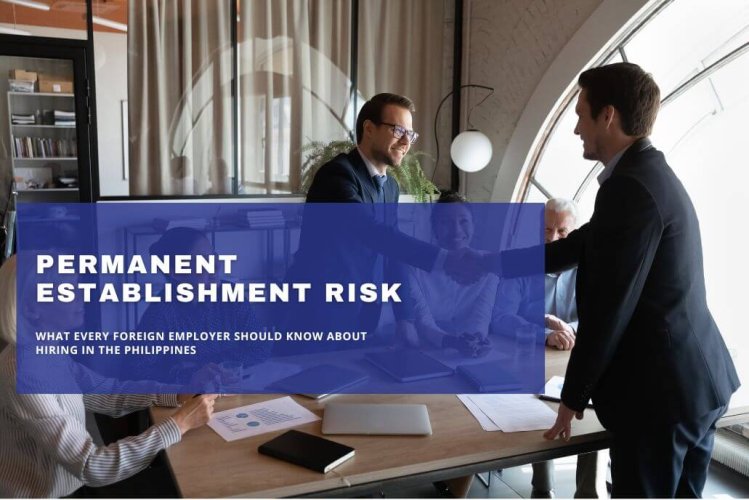
Hiring talent in the Philippines is an increasingly popular move for UK companies looking to scale efficiently, access top-tier talent, and expand their global footprint. However, doing it without the right legal and operational structure can create unexpected tax and legal exposure in the UK.
One of the most critical—yet frequently overlooked—concerns for foreign businesses engaging in international hiring is permanent establishment (PE) risk. Without the right structure, your overseas hiring strategy could create unexpected tax obligations or compliance challenges in the UK.
Understanding what triggers permanent establishment risk—and how partnering with an employer of record (EOR) in the Philippines can help you avoid it—can give you greater confidence as you build and manage your remote team.
What is Permanent Establishment Risk When Hiring Overseas?
Permanent establishment (PE) risk is the possibility that a tax authority in a foreign country will determine that your business has enough of a permanent presence there to subject your company to local corporate income taxes.
In plain language, if your UK-based company has a sufficient business presence in the Philippines, local tax authorities (the Bureau of Internal Revenue) may decide that a portion of your global profits was earned locally and should be taxed under Philippine law.
Under double taxation treaties—such as the UK–Philippines Double Taxation Agreement—PE risk is typically triggered by factors including:
- Signing contracts locally – Having team members based in the Philippines who regularly negotiate, finalise, or sign binding commercial contracts on behalf of the overseas parent company.
- Fixed place of business – Maintaining an office, branch, showroom, or fixed operational space in the country.
- Dependent agents – Employing individuals who exercise authority to habitually conclude contracts or perform core revenue-generating operations locally.
If you hire across borders, understanding these triggers helps you keep your remote operations compliant and tax efficient.
How Foreign Businesses Accidentally Trigger PE Risk
Many UK hiring managers and business owners enter the Philippine market with good intentions, only to accidentally trigger PE exposure through the following common mistakes:
- Directly employing local staff without a legal entity – Paying local workers directly from an overseas bank account without a local corporate structure or proper tax registration.
- Granting contract-signing authority to local personnel – Allowing Philippines-based managers or directors to negotiate deals, sign vendor agreements, or close client contracts.
- Maintaining a de facto office presence – Renting a physical office space or providing dedicated workspaces that create the appearance of a permanent local establishment.
- Misclassifying employees as independent contractors – Treating full-time, dedicated workers as contractors to avoid setting up payroll. Local labour authorities actively monitor misclassification, which can lead to severe penalties, back taxes, and retroactive statutory benefit liabilities.
Can You Hire in the Philippines Without Setting Up a Local Entity?

You may wonder: How can I hire employees in the Philippines without setting up a local entity? Yes, by using an employer of record in the Philippines. They become the legal employer on paper and handle payroll, taxes, benefits, and labour-law compliance, while you manage day-to-day work.
The Traditional Route: Incorporating a Local Entity
Setting up your own Philippine entity (such as a corporation or branch office) is the classic way to hire locally, but it comes with high cost, time, and compliance overhead:
- Time to launch – Incorporation and obtaining regulatory approvals (SEC, BIR, SSS, PhilHealth, Pag-IBIG, and local business permits) typically take several months before you can onboard staff compliantly.
- Upfront and ongoing costs – You will face incorporation fees, legal and accounting costs, minimum capital requirements (depending on business structure), and recurring compliance filings (tax returns, statutory contributions, and annual reports).
- Compliance burden – As the legal employer, you are fully responsible for correctly applying the Labor Code, statutory benefits (13th-month pay, SSS, PhilHealth, Pag-IBIG, service incentive leave), payroll taxes, and termination rules—plus navigating PE risk when operating cross-border.
The Alternative: Partnering with an Employer of Record
An EOR is a third-party provider that already maintains a registered legal entity in the Philippines and acts as the legal employer for your hires. You retain full control over hiring decisions, team management, and daily workflows, while the EOR manages administrative and statutory duties.
Typical EOR responsibilities include:
- Drafting locally compliant employment contracts
- Running payroll and withholding income tax and statutory contributions (SSS, PhilHealth, Pag-IBIG)
- Administering mandatory benefits such as 13th-month pay and service incentive leave
- Managing onboarding and offboarding, notices, and terminations in alignment with the Labor Code
- Maintaining required registrations and compliance filings with the BIR and other government agencies
Why Many Foreign Companies Prefer the EOR Route
For most businesses entering the Philippines, partnering with an EOR offers a faster, lower-risk path to hire:
- Speed – Onboard employees in days to a few weeks, avoiding lengthy waits for entity setup and regulatory approvals.
- Lower upfront cost – Avoid incorporation fees, capital reserve requirements, and heavy legal/accounting setup expenses.
- Reduced compliance risk – The EOR assumes legal responsibility for adherence to Philippine labour law, payroll tax obligations, and mandatory contributions, lowering exposure to misclassification claims and PE-related issues.
- Scalability and flexibility – Start with a lean team, validate the market, and decide whether to establish a dedicated local entity once headcount and revenue justify the investment.
Does Using an Employer of Record Protect Against Permanent Establishment Risk?
Yes, using an EOR provides a primary line of defense against PE risk, though it must be structured properly alongside your operational practices.
When you partner with an EOR, the provider legally employs your local staff through their established Philippine entity. They handle all employment compliance, local payroll, tax withholdings, and statutory benefit contributions (such as SSS, PhilHealth, and Pag-IBIG).
Because the staff members are legally employed by the EOR’s entity rather than directly by your overseas corporation, your company avoids establishing a direct employment footprint in the country.
An Important Caveat
While an EOR substantially mitigates PE risk, it’s not a magic wand that automatically eliminates all risk in every scenario. The nature of your employees’ day-to-day activities still matters.
If your EOR-hired staff is actively signing binding commercial deals or performing core profit-generating activities for your overseas business, tax authorities may still scrutinize the arrangement. Companies expanding internationally should always align their operational structure with independent tax advice tailored to their specific use case.
Best Practices for Compliant Hiring in the Philippines
To maintain low-risk, fully compliant cross-border employment in the Philippines, keep these best practices in mind:
- Restrict local contract authority – Ensure local staff does not negotiate or execute binding commercial agreements on behalf of your overseas entity. Keep all final approvals and signatures with your home-country directors.
- Define employment scopes clearly – Keep local team members focused on operational support, product development, back-office administration, or service delivery rather than revenue-concluding sales activities.
- Partner with a compliant EOR provider – Avoid temporary fixes like contractor misclassification. Work with a trusted partner that understands local employment compliance inside and out.
- Document everything – Maintain clear job descriptions, service contracts, and management workflows that clearly demonstrate the employment framework.
How CreaThink Solutions Supports Compliant, Low-Risk Hiring
Navigating Philippine labor laws, tax regulations, and complex HR requirements doesn’t have to slow down your international growth. CreaThink Solutions delivers comprehensive EOR and BPO services designed to help UK employers scale quickly and confidently in the Philippines.
We take care of payroll, benefits, and local labour compliance, so you can expand your team without the cost and complexity of setting up a local entity. Whether you’re building a dedicated remote team or outsourcing key operations, we’re here to support your people and your business every step of the way.
Contact CreaThink Solutions today to explore our EOR services and begin hiring in the Philippines with complete confidence. Stay updated with the latest insights by following us on Facebook, LinkedIn, and YouTube.